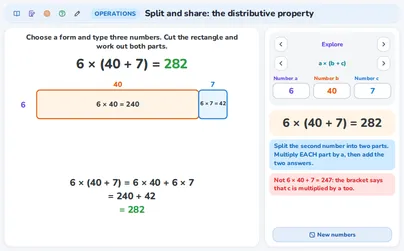
Number
1.1aFractions
1Pupils rewrite improper fractions as mixed numbers and the other way round, and explain a fraction such as 3/4 as a division, using this idea to solve simple sharing problems.3
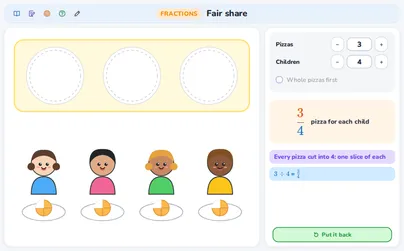 Fair share: 3 pizzas for 4 childrenSome pizzas are shared fairly by some children.Open
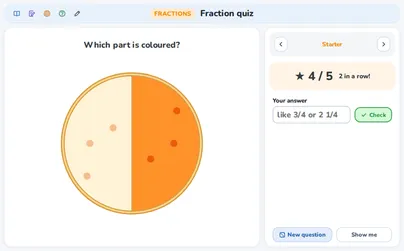 Fraction quiz QuizEndless practice with a score on the topic ‘What a fraction is’.Open
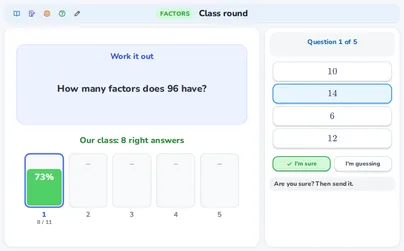
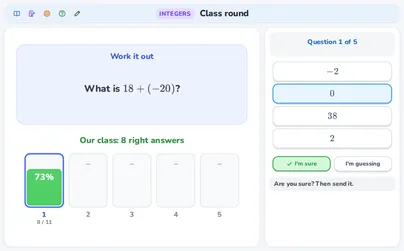
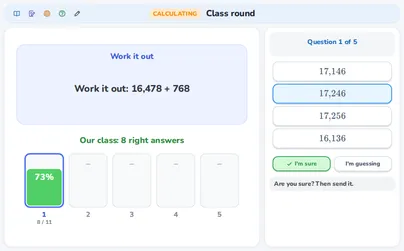
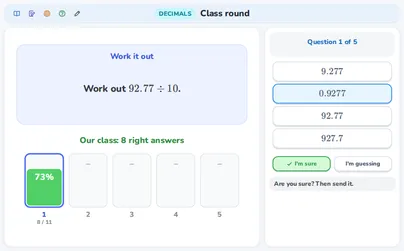
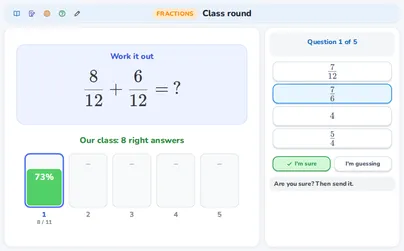
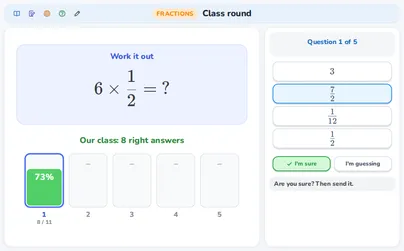
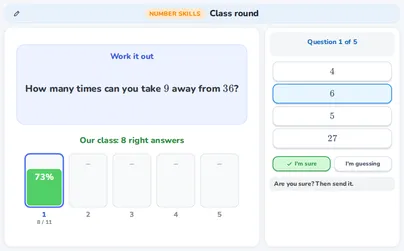
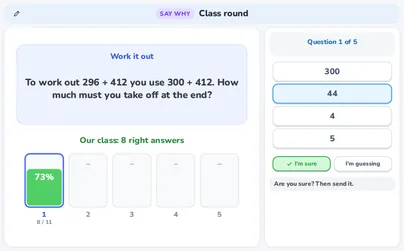
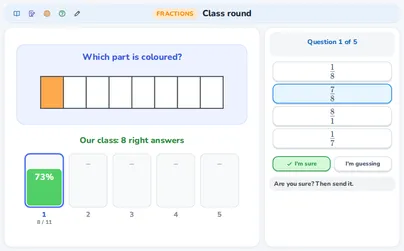 Class round: the whole class at once – What a fraction is Class roundFive questions for the whole class at once: definitions, rules, true or myth, and sums.Open
1.1bConvert decimals and fractions
1Pupils write a fraction as a decimal by dividing, and write a terminating decimal or a decimal with a whole part as a fraction or mixed number.3
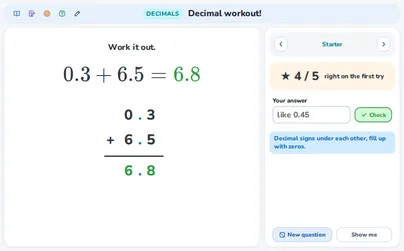
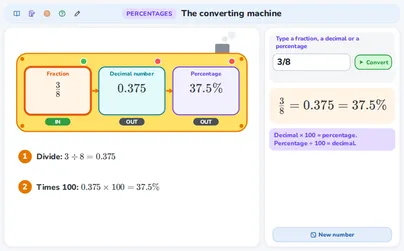 The converting machineType a fraction, a decimal number or a percentage: the machine shows the other two names of the same amount, with the steps it took.Open
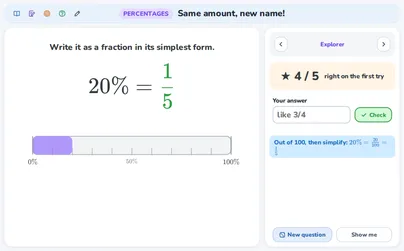 Same amount, new name! (quiz) QuizEndless practice with a score on the topic ‘Converting fractions, decimals and percentages’.Open
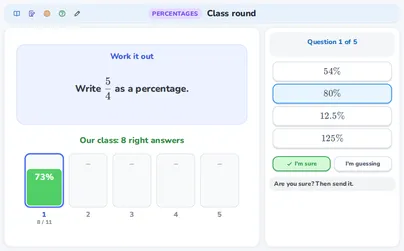 Class round: the whole class at once – Converting fractions, decimals and percentages Class roundFive questions for the whole class at once: definitions, rules, true or myth, and sums.Open
1.1cPercents
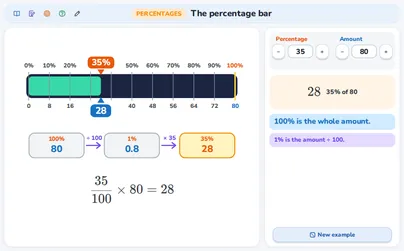
1Pupils read the percentage shown by a shaded grid or strip and recognise benchmark percentages such as 10, 25, 33 and 50 per cent as parts of a whole.2
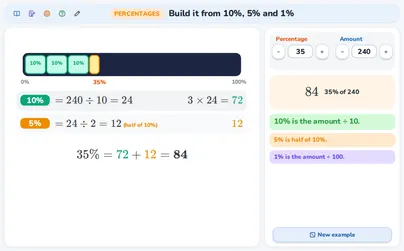
1.1dConvert between fractions, decimals, and percents
1Pupils change a quantity between its fraction, decimal and percentage forms, using grids to see the link, and apply the conversions in everyday problems.6
- The converting machineType a fraction, a decimal number or a percentage: the machine shows the other two names of the same amount, with the steps it took.Open
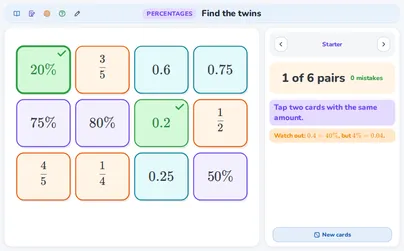 Find the twins: a matching gameTwelve cards, six amounts: every amount twice, in a different form.Open
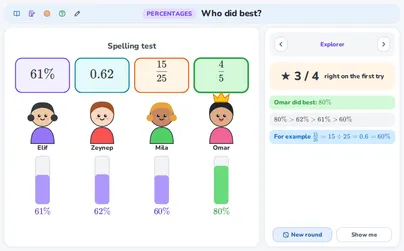 Who did best? Comparing scoresChildren's scores written in different ways: a fraction, a decimal number or a percentage.Open
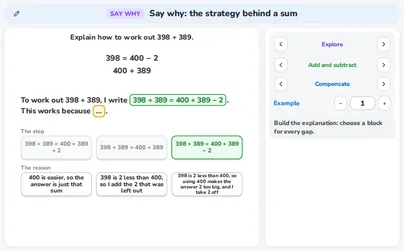
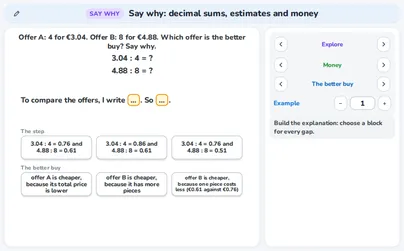
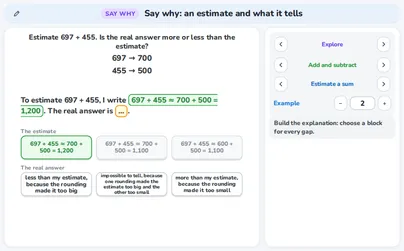
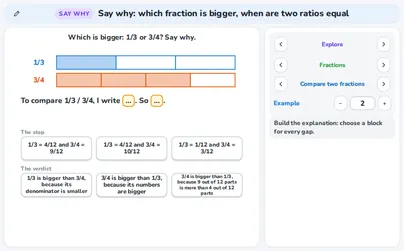 Say why: which fraction is bigger, when are two ratios equalSay why with fractions and ratio: 4 kinds of questions in two tabs.Open
- Same amount, new name! (quiz) QuizEndless practice with a score on the topic ‘Converting fractions, decimals and percentages’.Open
- Class round: the whole class at once – Converting fractions, decimals and percentages Class roundFive questions for the whole class at once: definitions, rules, true or myth, and sums.Open
1.1eOrder fractions, decimals, and percents
1Pupils put a mixed list of fractions, mixed numbers, decimals and percentages in order, from smallest to largest, by converting them to one common form.3
- Who did best? Comparing scoresChildren's scores written in different ways: a fraction, a decimal number or a percentage.Open
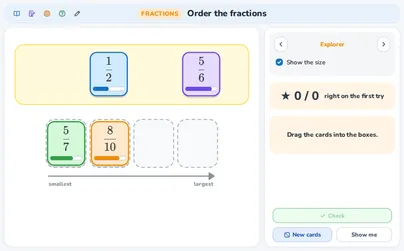 Order the fractionsDrag the cards into the boxes from the smallest to the largest, then check.Open
- Say why: which fraction is bigger, when are two ratios equalSay why with fractions and ratio: 4 kinds of questions in two tabs.Open